
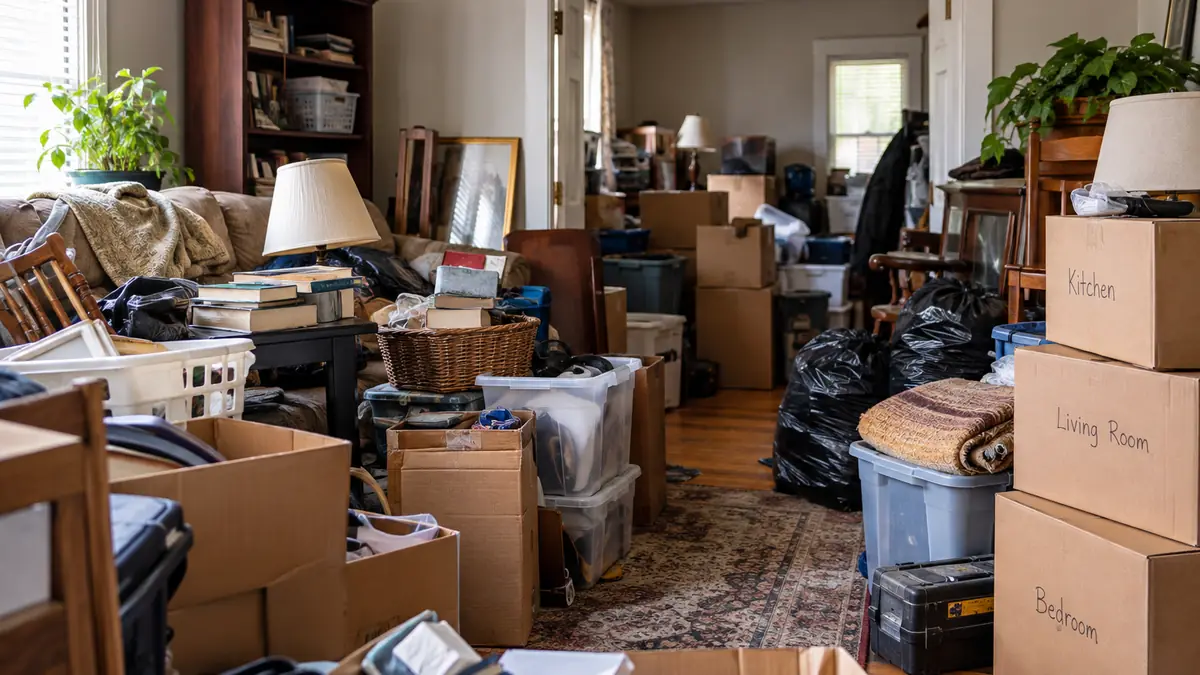
Cleaning out a home with a large amount of accumulated belongings can feel overwhelming. Whether you're helping a family member, preparing a property for sale, or reclaiming usable space in St. George, Washington, Hurricane, or a surrounding Southern Utah community, the key is to approach the project with a plan.
This guide walks through the cleanout process step by step, including how to sort belongings, identify items that need special disposal, and decide whether a driveway dumpster or full-service junk removal makes sense for your project.
Quick Answer: How Do You Start a Large Home Cleanout?
Start by identifying safety hazards, creating simple sorting categories, and clearing one manageable area at a time. Protect important documents and valuables, separate restricted materials, and decide whether you want to load approved junk yourself or hire a crew to handle the removal.
Start With a Plan Before Removing Anything
Before filling bags or moving furniture, walk through the property and get an idea of the size and condition of the cleanout.
Identify which rooms are affected, approximately how much material may need to be removed, and whether there are immediate safety concerns. If you're helping someone else clean their home, involve them in decisions about their belongings whenever possible.
For a large cleanout, break the project into smaller areas rather than trying to tackle the entire house at once. A bedroom, garage, hallway, or other defined space can provide a manageable starting point.
1. Identify Safety Hazards First
Heavy clutter can make it difficult to move safely through a home. Before beginning the main cleanout, look for blocked walkways, unstable piles, broken glass, sharp objects, spoiled food, pests, or other potential hazards.
Severe clutter can also contribute to fall and fire hazards. If conditions appear unsafe, don't rush into removing items simply to get the project started.
Do not handle materials you believe may be hazardous until you determine the proper way to manage and dispose of them.
2. Create Simple Sorting Categories
Sorting everything into a few basic groups can make a large cleanout much easier. Useful categories include:
- Keep — belongings that will remain in the home.
- Donate or give away — usable items that someone else may be able to use.
- Recycle — materials that can go to an appropriate recycling program.
- Dispose — unwanted household junk and debris that can legally be discarded.
- Special handling — electronics, hazardous materials, appliances, and other restricted items that may require a different disposal method.
Avoid creating too many categories. The goal is to make decisions easier, not create another complicated sorting system.
3. Work One Area at a Time
Instead of jumping from room to room, choose one manageable area and work through it before starting another.
Clearing a walkway or small room first can also create useful working space for sorting and moving items. As the project progresses, continue expanding into adjoining areas.
For particularly large cleanouts, expect the process to take time. Trying to clear an entire property in one rushed session can make an already difficult project harder to manage.
4. Separate Items That Shouldn't Go in the Dumpster
Not everything found during a home cleanout belongs in a dumpster.
Drop Load Dump does not accept concrete, hazardous waste, or electronics in our driveway dumpsters. Appliances require prior approval and may be subject to additional disposal fees.
Items that may require special handling include:
- Paint and solvents
- Pesticides
- Automotive fluids and oils
- Certain household chemicals and cleaners
- Batteries
- Electronics
Check the appropriate disposal requirements before throwing away questionable materials. Review our What We Take page and Disposal Guidelines before loading your dumpster.
5. Protect Important Documents and Personal Items
Large cleanouts can uncover important belongings that have been buried or forgotten.
Before disposing of boxes, bags, filing cabinets, desks, or other storage areas, check for identification documents, financial records, photographs, family keepsakes, jewelry, keys, and other valuables.
Put anything important in a clearly marked location away from the cleanup area so it isn't accidentally removed later.
6. Decide How the Junk Will Be Removed
Once you have a better idea of how much material needs to leave the property, decide how you're going to remove it. For many large residential cleanouts, there are two practical options.
Option 1: Rent a Driveway Dumpster
A driveway dumpster is an option when you're comfortable sorting and loading the unwanted items yourself.
Drop Load Dump delivers the dumpster trailer to your property. You load it during your rental period, and when you're finished, we return and haul it away.
This works especially well when you want to work through the property yourself and don't need a crew handling the belongings.
Our standard 1-day rental starts at $299 and includes one ton of disposal weight. See our dumpster rental pricing page for details.
Learn more about our driveway dumpster rentals →
Option 2: Use Full-Service Junk Removal
If the amount of material is overwhelming, items are difficult to move, or you simply don't want to do the loading yourself, full-service junk removal may be a better fit.
With Drop Load Dump's full-service junk removal, we provide an estimate before the work begins and handle the loading and hauling for you.
Learn more about our full-service junk removal →
7. Clean and Evaluate the Space Afterward
Once unwanted items are removed, you'll finally be able to see what the space needs.
Depending on the property's condition, the next stage might involve ordinary cleaning, minor repairs, pest treatment, flooring replacement, painting, or other maintenance.
If the property has significant sanitation, structural, mold, pest, or biohazard concerns, consider bringing in qualified professionals for the appropriate work.
Be Patient and Respectful During a Hoarded-Home Cleanout
Hoarding disorder is different from simply having a messy or cluttered home. The American Psychiatric Association describes hoarding disorder as involving persistent difficulty discarding possessions, regardless of their actual value, and notes that accumulated possessions can congest living areas and interfere with their intended use.
If you're helping a friend or family member, patience and respect are important. A cleanout may look like a straightforward disposal project from the outside, but decisions about possessions can be difficult for the person involved.
Need Help With a Home Cleanout in Southern Utah?
Drop Load Dump provides driveway dumpster rentals and full-service junk removal for cleanout projects throughout St. George, Washington, Hurricane, Ivins, Santa Clara, and surrounding Southern Utah communities.
Check our dumpster rental service area for more information about the communities we serve.
If you want to handle the sorting and loading yourself, a driveway dumpster gives you a convenient place for approved household junk during your rental period. If you'd rather have someone handle the loading, contact Drop Load Dump for a free junk removal estimate.
Sources & Additional Information
For more information about hoarding disorder, household hazardous waste, and electronics disposal, see these resources: